Carbon Brief
‘Very alarming’ winter sees Arctic sea ice hit record-low for second year running
Arctic sea ice has hit a record winter low for the second consecutive year, a streak that scientists are calling "very alarming." The shrinking peak extent signals accelerating polar warming with consequences that ripple far beyond the Arctic, from disrupted weather patterns to rising sea levels. Back-to-back records suggest this is no anomaly — it is a trend.
Read article →Grist
To keep climate science alive, researchers are speaking in code
Federal researchers are scrubbing terms like "diversity," "equity," and "climate" from National Science Foundation grant proposals to avoid triggering political scrutiny under the current administration. The shift represents a quiet but significant form of self-censorship, as scientists strategically reframe their work to secure funding. The trend raises urgent questions about how political pressure is reshaping the language — and potentially the direction — of American science.
Read article →
Mongabay
US-Indonesia trade deal slammed as ‘extractive colonialism’ over mining, fossil fuels
US and Indonesia have reached a trade agreement that critics say prioritizes American access to Indonesian natural resources at the expense of the environment. Activists warn the deal could accelerate mining, fossil fuel extraction, and deforestation across the archipelago, while environmental protections in the agreement remain nonbinding and largely unenforceable. For a country home to some of the world's most biodiverse ecosystems, the stakes of getting this deal wrong are extraordinarily high.
Read article →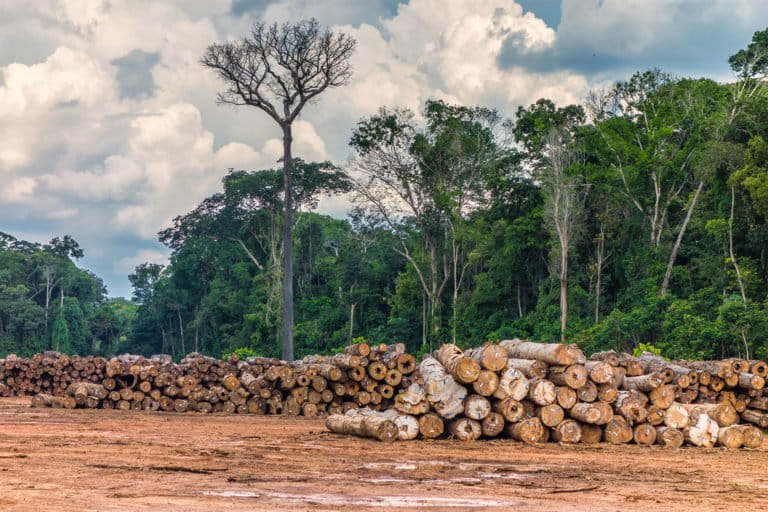
Mongabay
Study finds deforestation accounts for major Amazon rainfall decline
Deforestation is now a primary driver of rainfall decline in the Amazon, disrupting atmospheric moisture cycles and extending dry seasons across the southern basin. New research suggests current climate models may be significantly underestimating the scale of these impacts. The findings add urgency to conservation efforts, as forest loss and climate change together push the Amazon toward a tipping point from which recovery may be impossible.
Read article →Yale Environment 360
Experts Are Failing to Account for Ripple Effects of Extreme Weather, Paper Warns
Climate risk assessments are systematically underestimating the true toll of extreme weather by focusing on direct damage while ignoring cascading consequences. A fire, flood, or drought can destabilize supply chains, strain public health systems, and trigger economic shocks far beyond the initial disaster zone. The gap between modeled risk and real-world impact leaves governments and planners dangerously underprepared.
Read article →Get this delivered every morning
Join thousands of readers who get the world's most important stories, curated daily.
Start reading free →